Hillside Health Care Center

Hillside Health Care Center

Wednesday, April 17, 2013

Lice & Scabies


Meagan Young, who is finishing up her masters in public health, was a huge help in organizing our lice and scabies project.  She has worked closely with one of our medical directors and physicians, Dr. Thomas. They have been planning the steps on how to eradicate lice and scabies from an entire village after treating every village member. Meagan looked through hundreds of medical charts from different villages, tracking to see how many people have been diagnosed with lice and scabies in the past. This gave us an idea of which villages needed the most help in the Toledo district of Belize.  Meagan and Dr. Thomas communicated with village council members and the ministry of health to get things started and completed an IRB (Institutional review board).

WHO (World Health Organization) has had success with this approach to eliminate lice and scabies in the Solomon Islands and Australia, treating Aborigines. We are hoping to do the same by following their approach.

The village we treated had a census of 500 people. We were ready for a long day. But the actual number of people we treated that day was 628!!!

We started early in the morning and split up into teams. There were medical students, physicians, pharmacists, and our Hillside student lesion all helping out.

Our plan of attack: Permethrin 0.5% spray used on hammocks, bedding, clothing, etc. Permethrin 5% lotion was used on kids under 15kg. We rubbed the lotion all over their body. Head to toe. This treats scabies and lice. First dose of ivermectin is given to everyone over 15kg plus an additional dose (that will be taken in one week). To remind people of taking their second dose of ivermectin, the village church made an announcement the next week.

My job: Permethrin bather and educator. All families are given plastic bags to put any items that are difficult to wash.  It’s best to leave the bag of items out in the sun for about 2-3 days to kill the bugs. Families were also given laundry detergent and encouraged to wash any clothing lying around that may be infected. I also explained what lice and scabies are and how to treat for them. Every family received a small flyer about this.

Some families would say, “We don’t have lice or scabies.” We would then explain that you may not have it, but your next-door neighbor might. That’s the importance of treating every person in the village. Prevention is key.

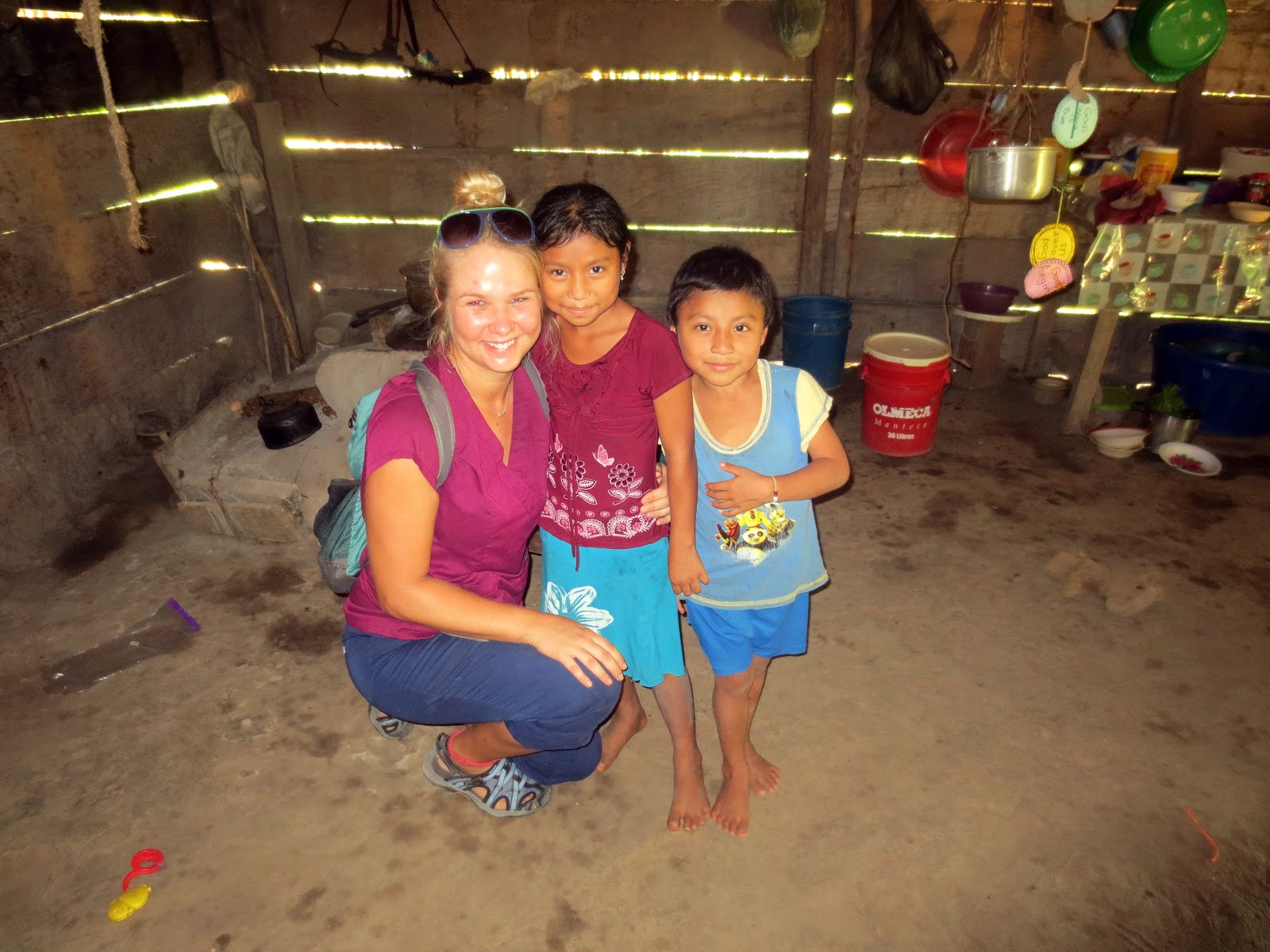
Everyone was welcoming and okay with us coming into their home. I had fun bathing the small children in permethrin. Most of them would giggle and laugh. It was interesting to see how people lived in the village. One thatched roofed house only had one hammock, but there were 6 family members. The kids told me they slept on the floor. That seemed to be the norm. The kids had smiles on their faces and genuinely seemed content with what they had. 

It was a long hot day walking from house to house. We worked for a total of 9 hours. We hope to treat other villages in the near future. Follow up work will be done in 2-3 months to see how successful we were in treating lice and scabies.  It was a great experience!


Hanging out with the kids :)

 Saying bye!
 Traditional housing
 Traditional living space
 Found some new friends
 Meagan bathing a little boy in permethrin (kills lice and scabies)
 Inside a home
 Taking a little break
 A baby I bathed in permethrin trying to air dry!

Saturday, March 16, 2013

Honduras Medical Trip 2013

From the end of January to the beginning of February, I was in Honduras providing medical care to the unserved people of their country. This was my fourth year traveling with the medical mission group called Amigos de San Carlos, which means "Friends of St. Charles." St. Charles is a church located in Tacoma, Washington. Our mission group has grown to about 55-60 people in total. The group is mixed with people of many different professions such as physicians,registered nurses, pharmacists, dentists, spanish translators, etc. We visited five villages northeast of the capital Tegucigalpa. We saw a total of 2,400 patients. Over the years we have developed a fluid system that keeps the patients organized and proper care can be administered. When arriving to a village, we are greeted by hundreds of people waiting in line.
Here is how the system works:


1. The patient is checked in (gives their name, birthday, age, weight is taken)

2. Seen by nurses in triage (if needed, RNs send patient to the
laboratory to get tests done such as urinary analysis,Hemoglobin/hematocrit, or a pregnancy test. Patients also get referred
to our dental team if needed). 

3. Seen by physician

4. Sent to pharmacy to pick up medications

5. Next is our sunglasses/reading glasses station

6. For kids there is a crafts station

7. Then to clothing  (we bring down shirts, pants, shoes, undergarments, etc.) Any woman who is pregnant or has a new born receives pre-packed maternity bags with the necessities. All families receive a
bag of toiletries.


There is an article in the Journal of the American Medical Association called "Duffle Bag Medicine." I encourage you to read to this. I feel our group does NOT fall under this category. We try and see the same villages every year and keep paperwork organized and filed so we can refer to previous notes. Even though a year goes by, I can tell people enjoy seeing our familiar faces and we give them hope. We prepare all year to see them, making
sure we have all the medications and supplies needed. Over the years,we have built a relationship with these people and they have grown to trust us.

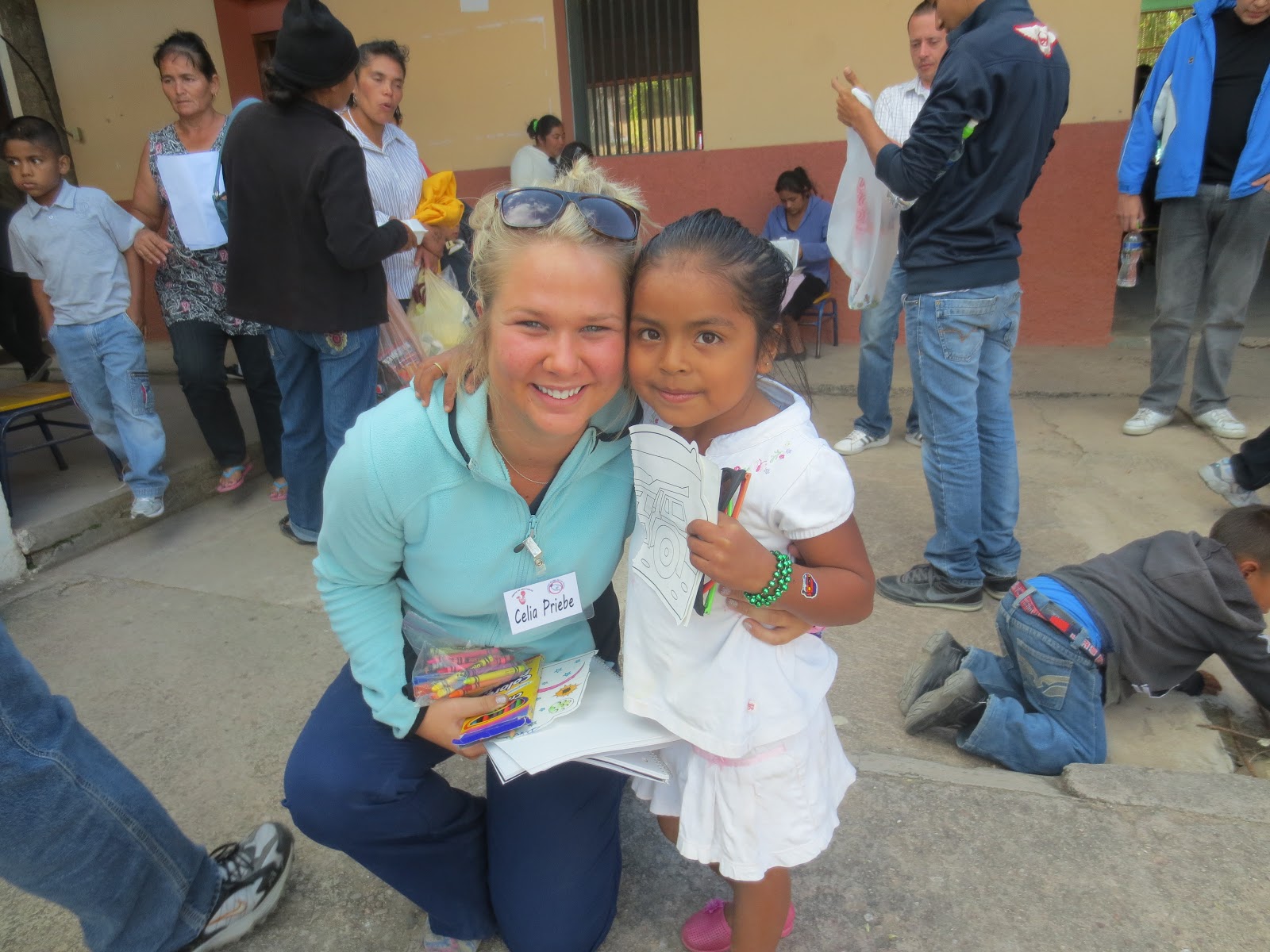
The children are growing so fast! I LOVE when they come running towards me calling my name. I try to bring them small gifts each year such as stickers, costume jewelry, and coloring books. Some of our
group members give out pictures to people from the previous year. I'm planning on bringing some next year for the kids. Always fun to have a hard copy of yourself and your family that can last years and years.

This year I tried to start an "education station". I brought some posters I made in Spanish, so the people could learn about the common diseases/diagnoses we see such as scabies, lice, high blood pressure, diabetes, anemia, dehydration, and dental care. Here in Belize, I've learned first hand that prevention is number one. We need the Honduran people to understand what they are being treated for, why, and how to avoid this in the future. My Spanish is very limited and having a booth with posters next to the sunglasses station made me less popular. No one seemed interested. I tried teaching people while they were waiting in line, but I needed a translator to really help me get my point across. We are very limited on translators so I gave up
after an hour or two. I then hung some posters up by the doctors and nurses so patients could read them while waiting (if they are able to read). I kept  the lice, scabies, and high blood pressure posters with me while
working with my dad, who is a gastroenterologist. People seemed surprised when reading some of the information. They were learning and hopefully can spread the word to friends and family.

I'm hoping to join our mission group next year and I'm looking forward to seeing some familiar faces. It was a great experience working beside my dad. I saw a lot of the same diseases/ diagnoses in Honduras that I
see here in Belize. I was surprised at how much I have learned medically over this year! Maybe one year I'll be able to work independently as a nurse practitioner there!


 Shaking hands with my good friend Lorraine in front of our banner: Amigos de San Carlos!


 Organizing our clothes and supplies at our compound.


 Patiently waiting to been seen.


 Sunglasses and reading glasses station!


 Nurses at work in triage :)


 Found a new friend at the sunglasses station while taking a break.


 Our dental team at work.


 Pharmacy.


 Dr. Roes working hard.


Displaying my posters I made. This poster was about "piojos" which translates to "lice."


 Coloring with this little one while her mom gets assessed by my Dad.


Teaching our patients about high blood pressure with my poster!


After taking Spanish classes for 5 years my dad is able to communicate with the patients by himself. He is still continuing Spanish class.


 How we organize our medications.


Lorraine and I hanging out with friends from the village Flor Azul.


Lorraine is one of our spanish translators! This was our 4th year together in Honduras!


My favorite kids at the village Lomas Limpias.


 Line of patients waiting in the village Tatumbla.


 Working with Dad.


Made a new friend this year! 


Wednesday, February 20, 2013

I'm Back!

Yes yes it's been too long since since my last blog. So here I go!


Here is my first update:  I am now the official "Nursing Medical Director" of Hillside! I was very excited to receive my new title, it feels amazing! I also extended my time here in Belize until December 15th so far. I'm not ready to leave yet! So much to see and learn still!

Home visits are going well. I find it difficult to discharge my patients who no longer meet the criteria of being "home bound." I become very close with my patients and especially their family members. It breaks my heart when I hear things like "Nurse, you're giving up on me!" I have to say "No! You're doing so well that I now have to see you at Hillside clinic. Consider this a huge accomplishment on your part. I'll still be your nurse!" That's an example of a conversation I had a few days ago. We pick patients up in town twice a week and bring them to the clinic and back home. I always make sure they know that this option is available, so we can follow up with them. I have a waiting list of very sick patients that I would like to start seeing once I discharge someone who is no longer home bound. There's only one of me, so I have to be careful about how many patients I take on! I want to provide the best care possible and not spread myself too thin.

I am still enjoying working with/helping out the doctors and medical students in our clinic. Clinic is from 8am - noon. I'm finally starting to discover my strengths in nursing. Wound care is my number one! I also like the adrenaline rush when helping the patients who come into the clinic with acute issues that need to be addressed right away. Working in the clinic challenges my brain in a different way compared to working with my chronically ill patients, which is why I schedule myself in the clinic in the mornings and see my home bound patients in the afternoons. This way, I get the best of both worlds!


Charting in the early AM


Inside our pharmacy. Alfia has been working with Hillside for about 5 years! She's crossed trained to do many things in the clinic. Currently working on becoming a certified pharmacy tech.


Pharmacists + Nurse


My usual morning coffee while charting


Home visit :)


Saturday, November 24, 2012

Overnight


Hillside takes the Toyota land cruiser twice a month and spends the night in remote villages so we can provide health care to underserved people. My first overnight experience was last week and I’m proud to say, I survived!

We drove 2 ½ hours to a village close to the border of Guatemala called San Vicente. Once we arrived, we quickly unpacked our medical supplies and waited for any people needing medical attention. We ended up seeing 40 patients that were split between 2 physician assistant (PA) students, a doctor in residency, and myself. The most interesting patient I had was a young boy who had a large abscess. We ended up doing an I&D (incision and drainage) and started him on some antibiotics. I’ve been practicing diagnosing and prescribing meds with the doctor’s supervision. Sometimes, I’m falling out of the nursing role and feel more like a PA student, which I really enjoy. 

At 4 pm, we started to pack things up and ate dinner at a local’s house in the village. We ate inside a small thatched hut while watching Mayan women make tortillas on the open stove. Our dinner was “caldo,” which is Spanish for soup. You eat the chicken and broth with tortillas and drink the leftovers from the bowl. I think it’s a tasty meal, especially when I don’t find a chicken foot in my soup.

After dinner, the PA students gave a short presentation about scabies and lice to men, women, and children who gathered in the community center. Many people attend because they know we raffle out prizes at the end. We always hope people go home learning a few new facts so they can start to prevent these issues.

As soon as the presentation ended, we drove to a near by village called Jalacte. This is where we spent the night…in the town’s community center building. I called first dibs on one of the exam room tables for my bed. I quickly covered the table with piece of foam, hung my bug net up and laid out my sheets. I was all settled. Then a few of us walked to the river running through town to bathe. It was completely dark and all we had were our headlamps and flashlights. That was my first time bathing in a river at night with just a headlamp on. The cold water felt refreshing after a long day of working. After we were all done getting clean, we headed back to get some sleep. Most of us fell asleep around 9 pm. At around 3 am the roosters starting crowing and did not stop all morning. We were also next door to the mill, where the villagers get their corn grounded for them to make tortillas and such.

We were exhausted when we woke up at 6 am. We had to clear out all of our beds and backpacks because the patients would be coming soon. Slowly, but surely, patients started trickling in.  That day we ended up seeing 54 patients, who were mostly all women and children. Unfortunately, most of the men were gone out in the fields working. I referred two of my patients to our physical therapist Annette who came with us this trip. I enjoyed watching her assess my patient’s muscular skeletal issues. I’ve realized that “back pain” can be much more than just tight or strained muscles. When seeing our last patient, we packed up all of our supplies and started our journey back to the clinic.  Our long drive consisted of many potholes and windy dirt roads. We made it home safely. I was drained and ready for bed.


Unpacking the medical supplies from the land cruiser.


San Vicente's community center.


 Teaching about lice and scabies to the community.


Jalacte health center/ our overnight sleeping quarters.


Taking a short break.

Jalacte village. 

Thursday, October 18, 2012

Belizean Diet


High blood pressure, high cholesterol, diabetes, and strokes are some of the most common diagnoses I see here in Belize. I’ve noticed that the majority of Belizeans here are overweight. I understand why weight is an issue in this area. I have first hand experience. Unfortunately. I personally have experienced gaining weight during my time here. Here are my thoughts as to why:


1. Portion sizes: Belizeans enjoy BIG meals which usually include large portions of rice, beans, and chicken. When I order a meal like this I tell myself, “I’ll only eat half and save the rest for later.” It never works. I feel like I need to eat a lot of rice and beans to feel satisfied. It’s not filling! So with this said, I’ve come to the conclusion that large portions + overeating = guaranteed weight gain. This is an obvious issue in America as well.


Side note: I realized I had gained some weight when a local told me while I was buying milk, “Gyal, you looking fat!”…. And that’s the day I started to make exercise my priority.

2. Heat vs. hunger: after talking with other American volunteers here, we’ve all come to agree that the temperature outside influences our cravings for carbohydrates, chocolate, and junk food. We strongly believe that there is some scientific data somewhere that has been done to back up our theory. I also firmly believe that this extreme heat and humidity causes us to feel lethargic, which we tend to confuse with feeling hungry. So, when we really need to take a nap, instead we just snack and snack.

3. Availability: It’s very difficult to eat healthy here. I like options and we don’t have very many. My current staple is peanut butter and bread. I wish I could buy things like non fat yogurt,100 calorie snack packs, bag of mixed veggies, etc. I miss prepacked mixed greens from Trader Joes and low calorie frozen meals. You have to search hard just to find a head of lettuce. There’s no “one-stop shopping” here. I usually make rounds and visit multiple stores to gather all the items I need. Sometimes certain veggies and fruits aren’t available for various reasons. Buying something as simple as milk can be tricky… You never know how long it’s been sitting out in the sun before it was stocked in the store refrigerators. Milk here will only last a day or two before it goes sour. I have now learned to buy “Lala,” which is powdered milk.

4. Coca cola: It’s available everywhere!! Only 1 dollar Belize (50 cents American) for a glass bottle. It’s refreshing to drink in this hot weather. Drinking water all day long gets boring after a while. I need change, and coca cola is readily available for a cheap cost! The coca cola here is made with sugar, not high-fructose corn syrup. You can tell the difference! It’s VERY addicting. I’ve realized quickly that I need to start cutting back on the soda. It contributes to weight gain and also I want to keep my teeth for much longer.

5. Lack of exercise: I’ve noticed that, culturally, it’s not common to go on runs or take a walk like in the U.S. Women are the cooks of the household and take care of the children. Exercise is not a part of what has been passed down from generation to generation. Cooking, cleaning, sewing, selling food, etc. is normal. Not jogging down the street or going on a power walk. I also think people may just need to be educated more on the benefits of exercise and be encouraged to start. However, I have a different excuse for my lack of exercise. It’s TOO HOT! I would pass out if I ran in this weather. I try and wait until 4 or 5pm when the sun goes down. I then only have until 6 pm, when it gets dark, to get back to campus from a walk or run. I tend to take naps after working, so then I run into the problem of napping too long. I have been struggling with this. It’s been a challenge!

 Yummy cultural meal called jippi jappa which is a type of palm. It tastes so much better than it looks!
 Medical students love to make cake for everyone.
 Belizean coca cola. Yum.


Fried fish and chips. Eyeballs and all!


My favorite: fried panades- fried corn shells with beans or fish inside
Charlotte cooks across the street from Hillside clinic. She makes an amazing panade sauce- chopped up cabbage in vinegar and other spices. 

Typical Belizean meal. LOTS of rice and beans with pork or chicken. 

Friday, September 28, 2012

“The oldest trees often bear the sweetest fruit”


The majority of my patients are elderly, so inevitably I have experienced some of them passing away. As their caretaker, I always find it personally challenging when a patient dies. Thoughts run through my head and I wonder: could I have done anything more?

I consider myself a hospice home visit nurse at times. When a patient is dying, I work closely with family members on ways to keep their loved one comfortable during the end of life process. Morphine is not available at the clinic at the moment. The strongest pain medicine we have in our pharmacy right now is Ultram ER (narcotic like pain reliever). Therefore, I encourage alternative measures of comfort as well such as massages, playing comforting/calming music, sponge baths, keeping patients clean and dry, repositioning frequently, and engaging the patient in conversations if possible.

Recently, I was able to attend one of my patient's funeral in town. I learned about the typical process and traditions a family goes through. When someone passes away here in town, their body is taken to a morgue to be identified, cleaned, prepared, etc. Then the family starts to plan for the wake. A wake is a ceremony which takes place at the house of the deceased with the body present. Friends and family gather to mourn, celebrate, drink, eat, sing, and reminisce. This lasts all through the night until the next day in which the funeral takes place. The funeral I attended was an open casket, which I was told is standard. After the funeral, the body was put in the back of a truck and slowly driven to the cemetery across town. Others walked and followed behind in a procession. Once at the cemetery, it was surreal to see the casket placed into a hollow cement grave. Some songs were sung and last words were said, then cement was poured on top of the casket and spread all around. The sun was blazing hot and the family members were sobbing uncontrollably. I was lost for comforting words at that time. I stood and watched as the family mourned and the cement continued to pile on, layer by layer.

I find it amazing how well the elderly are taken care of by family members and the community here in town.  Many times when I visit a patient, they have family members all around--even great great grandchildren are running around the house. In my opinion, no nursing homes are needed here. It’s encouraging to see how involved the family can be with the care of their loved one. For example, I rarely see things like bed sores on my patients who are bed bound. They are turned every couple of hours by their supportive family. I’ve built some strong relationships with family members, communicating with them has helped me provide better care for the patient. The family helps me get to know what’s normal or abnormal during my assessments. It’s been an enjoyable experience learning how to work with a family and the patient as a whole unit.


Celebrating turning 100 years old!

Wednesday, September 5, 2012

Scorpion encounter


Monday morning started off like any normal morning. I woke up at 7 am, threw on my scrubs, and started to pull my hair up in a ponytail. If you talk to my family or close friends, they might say I can be messy at times. On either sides of me was a heaping pile of clean and/or questionable dirty clothes. As I finished with my hair I turned around and suddenly felt an excruciating pain on my pinky toe. I quickly looked down and saw the culprit--- a scorpion about 4-5 inches long with lobster like black pinchers and the infamous arched tail. It quickly jolted under my bed. I could almost sense that it knew its life would soon be ended. The pain increasingly got worse –like an injection that never ends. I started to scream due to the sharp pain. Two physical therapists came running into my room with looks of panic on their face, followed by a visiting doctor and two medical students. I was in good hands, to say the least. I was carried to the closest chair and ice was applied to my toe. Then, I was brought warm milk by one of the Belizean staff members. I was told this helps decrease the pain, so I drank it without question. Then another Belizean staff member said to take the guts of the scorpion and rub it on my toe. The toxins are supposedly drawn out of the body that way. I politely declined. Another staff member ran into the room and asked where the scorpion was. I forced the words “under my bed” through my tears. I usually hate killing insects or any type of critters. If I find them inside the house, I pick them up and let them free outside. The scorpions on the other hand… they don’t count. I moved down stairs to the clinic and continued to ice my toe. I started to feel like I was coming down with the flu. I decided to take the morning easy. No home visits this AM. Then something strange happened. Around 1 hour after the sting, my lips, tongue, and hands started to get a tingling sensation. The numbness and tingly feeling lasted for over 18 hours! I googled the symptoms while icing my foot in the clinic and found that the scorpion injects a neuro-toxin which produces the numb sensation. The scorpion can actually regulate how much venom is injected as well. Another fun fact about Scorpions is that they glow when exposed to certain wavelengths of ultraviolet light (i.e. a black light) due to the presence of fluorescent chemicals in the cuticle. I might invest in some black lights very soon. On the bright side, I had a great cultural experience, right? Hopefully I won’t have another quite like this one. I moved out of the treehouse, which is now being sprayed, bug bombed, and repaired. There are holes in the roof where insects and other critters can easily crawl inside. I have a family of bats, rats and mice that I can hear at all times of the day running around in the ceiling. And also, of course, my geckos. I usually have around 5-10 in my room at all times on the wall. With all the spraying and repairs, I’m hoping to move back in and live a scorpion free life. I now have learned the hard way that keeping my room clean is important. You were right, mom.